

Environment & Climate
-
Climate Change

-
Greening Brighton
-
Natural Resource Management (NRM)
-
Weed Management
-
Ducks of Brighton
-
Management of Dispersive Soils
About climate change
Greenhouse gas emissions are created when we burn fossil fuels, like gas, petrol, oil and coal. When these gases enter the atmosphere, they act like a blanket trapping the sun’s heat and increasing temperatures. This warming effect is causing our climate to change, resulting in more frequent and severe weather events like bushfires, floods and storms as well as longer-term changes to weather patterns. Climate change threatens human health and wellbeing, as well as the critical ecosystems we rely on.
Brighton’s Climate Change and Resilience Strategy
Brighton Council has been acting on climate change for over a decade now. In this time, the council has worked to reduce its emissions through waste, energy efficiency and renewable energy actions. This work and future initiatives are guided by Brighton’s Climate Change and Resilience Strategy that outlines a commitment to reducing greenhouse gas emissions and adapting to the impacts of climate change. The strategy includes 55 Key Actions for the council to take in relation to climate change leadership as well as council and community emissions reduction, risk reduction and resilience.
See the Climate Change and Resilience Strategy
Reducing emissions
Reducing greenhouse gas emissions is critical for slowing global warming and ensuring a stable climate. For this reason, Brighton Council has set an ambitious corporate emissions reduction target of 85% by 2030 on 2021 levels, and net zero emissions by 2035. Meeting these targets requires measuring council’s emissions over time and monitoring emissions reduction initiatives to track progress to net zero emissions. An emissions reduction plan has been developed for Council to guide actions that will help meet the net zero target.
See Brighton’s Corporate Emissions Reduction Plan
Great progress has already been made towards the 2030 target, with significant emissions reductions resulting from changes to landfill arrangements and the introduction of FOGO bin collection in 2022. However, there are further opportunities for emissions reductions, which have been outlined in the latest Corporate Carbon and Energy Footprint reports.
- Brighton Council Emissions Inventory Report FY2024/25
- Brighton Council Emissions Inventory Report FY2023/24
- Brighton Council Corporate Carbon & Energy Report 2019 – 2022
Households and businesses within the Brighton municipality also have a role in reducing emissions. A Community Carbon and Energy Footprint report shows the sources of emissions in the community and describes the opportunities for reducing these. Having clear evidence regarding source emissions helps plan and guide decision-making for the transition to a low carbon economy.
See Brighton’s Community Carbon and Energy Footprint
Adapting to climate change
Due to climate change, extreme weather events are only becoming more frequent and intense. That’s why it is important to start preparing and adapting to climate impacts now. Brighton Council has a newly updated Adaptation Plan that identifies climate risks and adaptation actions for the municipality. This plan will guide work to keep the community safe and future-proof public assets and infrastructure. Actions from the plan will be implemented over time as resources become available.
See Brighton’s Climate Change Adaptation Plan 2024
In addition to the Adaptation Plan, Brighton Council is looking more deeply at specific climate hazards, including coastal hazards, bushfires and heat.
Brighton Council engaged SGS Economics & Planning to produce a report on the impact of coastal hazards, including erosion, inundation, and stormwater hazards, at three sites across the municipality. The report shows that coastal hazards have current and future potential to impact private property, Aboriginal heritage sites, natural values, and public infrastructure. In response to this report, Brighton Council has committed to developing a Coastal Hazards Policy, communicating the risk to the community, and conducting further engagement with key stakeholders.
See the Derwent River Foreshore Coastal Hazards report
Brighton Council is also invested in reducing bushfire risk and engaged Fire Risk Consultants to produce a Bushfire Strategy for the municipality and a Bushfire Mitigation Plan for Dromedary. See the Strategy and Plan below.
- Brighton Council Bushfire Mitigation Strategy 2025-2035
- Dromedary Bushfire Mitigation Plan 2025-2030
Brighton Council engaged Geoneon to analyse residential heat risk in in the municipality, focusing on how different suburbs experience heat exposure and social vulnerability. The results of the heat risk analysis show that Brighton and Bridgewater are the most at-risk suburbs, reinforcing the urban heat island effect, where dense, built-up areas experience higher temperatures than more sparsely inhabited suburbs. Green infrastructure, reflective surfaces, and urban planning can help mitigate heat retention and improve thermal comfort in high-risk areas. As climate risks continue to grow, proactive strategies will be essential to minimise heat-related health impacts and enhance urban resilience.
See Brighton’s 2025 Residential Heat Risk Report
Trees play a vital role in creating cooler, more liveable communities. They provide shade, reduce heat, and offer habitat for birds and wildlife. With rising temperatures driven by the urban heat island effect, trees are increasingly important for cooling our streets and homes.
As Brighton shifts to a dryland climate, integrating the appropriate drought tolerant vegetation will be fundamental in establishing the future tree cover of the municipality. Street tree establishment will be complemented by the introduction of denser understorey vegetation, introducing habitat complexity and aesthetic appeal. Urban greening is rapidly becoming a critical component of green infrastructure for future sustainable development. Increases in vegetation cover within urban areas improve environmental outcomes, beautify landscapes for residents and build community resilience to climate change.
Brighton Council is committed to expanding our urban forest. We’ve set an ambitious goal to increase tree canopy cover by 1% each year, aiming to reach 25% by 2033. Achieving this vision will require a shared effort between Council and residents—working together to plant, protect, and maintain green space across our growing areas.
Greening Brighton Strategy
Greening Brighton Strategy 2024–2033 sets a bold vision for a greener, healthier, and more climate-resilient municipality. Building on the success of the 2016–2021 strategy, this updated plan outlines a comprehensive roadmap to increase urban tree canopy cover, enhance biodiversity, and improve community wellbeing.
Key Goals:
- Increase canopy cover by 1% annually, aiming for 25% by 2033
- Promote native and drought-tolerant vegetation to adapt to climate change
- Create green corridors linking parks, streetscapes, and nature strips
- Invest in water-sensitive urban design and irrigation infrastructure
- Foster community engagement through planting programs and education
The strategy identifies priority areas such as Bridgewater, Herdsmans Cove, and Gagebrook, and provides detailed actions for greening streetscapes, parks, nature strips, and new developments. It also introduces a landscape bond mechanism to ensure long-term maintenance and accountability.
This strategy aligns with Brighton Council’s broader goals for sustainability, climate resilience, and community pride. It’s not just about planting trees—it’s about growing a connected, vibrant, and liveable Brighton for generations to come.
See the Greening Brighton Strategy 2024-2033
Recommended tree and plant species can be viewed here.
To track progress towards the target of 25% urban canopy cover consultants Geoneon were engaged to establish a reliable baseline for ongoing monitoring of urban greening. They produced a report comparing canopy conditions in the Brighton municipality between 2020 and 2025, providing insights into spatial change and distribution over time. The results of the canopy monitoring show a generally stable canopy trend across the council area, with small variations between suburbs and land categories. At the urban council scale, overall canopy cover has changed only slightly from 11.0% in 2020 to 10.7% in 2025, representing a modest decrease within the expected uncertainty range. This suggests that, despite development pressures and environmental variability, Brighton’s urban canopy has remained relatively steady over the five year period.
See Brighton’s 2025 Urban Forest Canopy Report
Street Tree Strategy
The Brighton Council Street Tree Strategy, prepared by Inspiring Place, provides a comprehensive framework for enhancing the urban tree canopy across Brighton’s suburbs. Adopted in 2019, this strategy guides the selection, placement, and prioritisation of street trees to create greener, healthier, and more attractive streetscapes.
Key features of the strategy include:
- Tailored tree species selection for each suburb, considering climate resilience, visual appeal, and biodiversity.
- Street planting priorities that identify high, medium, and low priority areas for tree planting.
- Designated tree types including landmark, large, small, and fastigiate species to suit different street profiles.
- Integration with planning and development to ensure consistent and sustainable tree planting across new and existing urban areas.
The strategy supports Brighton Council’s broader goals for climate adaptation, urban cooling, and community wellbeing, and complements initiatives like the Greening Brighton Strategy 2024–2033.
Explore the strategy to see how Brighton is growing a greener future—one tree at a time.
See the Brighton Street Tree Strategy
Public Vegetation
As Brighton continues to grow, high-quality green spaces are becoming more essential—especially in higher-density areas where private outdoor space is limited. Well-designed landscaping not only enhances the look and feel of our neighbourhoods but also adds real value to properties, making it a smart investment in both aesthetics and functionality.
Brighton Council has committed to plant more tree and improve public places across the municipality. It will be done in accordance with the Greening Brighton Strategy and Street Tree Policy.
Maintenance
We carry out regular inspections and pruning of trees that grow on our streets and parkland to ensure adequate clearance over footpaths, maintain visibility for drivers, and prevent interference with infrastructure and power lines. Trees located beneath power lines are pruned by vegetation contractors accredited by TasNetworks.
In general, Brighton Council does not consider issues such as falling leaves, fruit, flowers, bark, sap, or the presence of wildlife as valid reasons for pruning. Requests for pruning to improve views or solar access are considered individually. Pruning will not be performed if it would harm the tree’s health, significantly alter its natural form, or negatively affect native wildlife habitats used for feeding or nesting.
Report a tree issue
If you believe a Council-owned tree has caused or may cause damage to your property, please email us at admin@brighton.tas.gov.au with the details. Once we receive your request, we’ll inspect the tree as soon as possible and follow up with you by phone or email to share the outcome.
If you notice a Council tree that poses an immediate safety risk, please call us urgently on 03 6268 7000. We’ll prioritise an inspection in these cases. Examples of urgent tree issues include:
- Broken branches that may fall onto roads, footpaths, or driveways
- Trees that are leaning suddenly, have fresh cracks in the soil, or exposed roots
- Trees with new splits or cracks in the trunk
- Fallen trees on public land that are blocking access
Report vandalism to trees
Pruning, damaging, poisoning, or removing a street tree without approval is considered vandalism and may result in penalties.
If you witness vandalism involving a Council-owned tree, please:
- Take photos of the damage if it is safe to do so.
- Call Customer Service on (03) 6268 7000 immediately if the vandalism is in progress.
- Email admin@brighton.tas.gov.au if the vandalism has already occurred.
Private vegetation
Vegetation on your property
Removing a tree on private property
In most cases, a planning permit is not required to remove trees or vegetation within urban areas. However, it’s important to check with Council’s Development Services before proceeding, as a permit may be required in certain situations. These include:
- Properties located within a place or precinct listed under the Historic Heritage Code
- Areas affected by relevant natural values or hazards Codes under the Tasmanian Planning Scheme – Brighton
If you’re unsure or have any questions, please contact us at development@brighton.tas.gov.au or call (03) 6268 7041.
Planting trees on private property
Planting trees in your garden contributes to Brighton Council’s overall tree canopy and helps provide shade and environmental benefits. In most cases, you don’t need Council approval to plant trees on private land, and we encourage planting large species where possible, as they offer the greatest benefits to the community.
However, it’s important to ensure that nearby public areas—such as footpaths, laneways, rights of way, and roads remain clear and accessible. Trees on private property must be pruned to maintain a minimum clearance height of 3 metres, and all branches, shrubs, and vegetation should be trimmed back to your property boundary. This helps protect pedestrians and cyclists, ensures visibility, and prevents damage to vehicles.
Trees must also be planted clear of any easements and underground infrastructure. Property owners are responsible for ensuring that private overhead power lines are free from interference by trees or branches.
Please note that Council does not prune trees located on private property.
The suitable tree and plant species selection are also important due to the changing climate in Brighton municipality. See the recommended list for planting here.
Vegetation on a neighbour’s property
If you’re concerned about a tree or plant growing on a neighbouring property, the best first step is to have a respectful conversation with your neighbour. If that doesn’t resolve the issue, you can follow the formal process outlined in the Neighbourhood Disputes About Plants Act 2017, which provides clear mechanisms for resolving disputes related to overhanging branches, overshadowing, or nuisance plants.
Please note that Brighton Council cannot offer legal advice and will only intervene if there is clear evidence that a tree poses a public safety risk, such as dead limbs overhanging footpaths, or if the plant is classified as a declared weed under the Biosecurity Act 2019.
Landscaping Policy
righton Council is committed to fostering greener, healthier, and more climate-resilient communities. The Landscaping Policy strengthens our approach to integrating landscaping into development and subdivision applications across the municipality.
This policy provides clear guidance on the level and quality of landscaping expected in urban developments, with a focus on:
- Enhancing urban waterways and flood resilience
- Increasing vegetation cover to improve health, wellbeing, and urban cooling
- Creating attractive streetscapes that support active lifestyles
- Ensuring long-term maintenance of landscaping through a proposed bond mechanism
Explore the full policy to understand how landscaping contributes to sustainable urban design and how developers can meet Council’s expectations for green infrastructure.
Caring for Our Environment
Fostering local land care networks
In recent times community land care groups have been reinvigorated, with the commencement of two Landcare Tasmania groups in Old Beach and Bridgewater (in August 2021 the Bridgewater group became the 300th Landcare Tasmania group). Both groups regularly meet to remove weeds, collect and propagate seeds and replant native habitat.
If you are interested in helping, everyone is welcome to join:
- Bridgewater Landcare Group meet on the second Sunday of each month 10am-1pm.
- Friends of Old Beach Foreshore meet on the third weekend each month alternating between Saturday and Sunday – find them on Facebook here
Brighton Council supports the groups through membership and insurance fees, expert advice, weed removal and promotion of key events, such as:
- Clean Up Australia Day rubbish collection
- National Plant a Tree Day
Brighton Council continues to support a community network for environmental care working together, such as Landcare Tasmania, the Material Institute (MONA) in Bridgewater, State Government and community groups such as the kutalayna collective and school initiatives.
Cherishing our environment
The Derwent Catchment Project (DCP), a grass roots community Natural Resource Management (NRM) organisation, were engaged by Brighton Council in November 2021 to develop a stakeholder supported strategy to best manage the municipality’s natural areas. The expertise and resources DCP provide have led to:
- Brighton Council Weed Strategy – Brighton Council – Weed Management Strategy
- Draft Natural Resource Management (NRM) Strategy – Brighton Council Draft NRM Strategy
- Foreshore Management Plan-Brighton Council Foreshore Management Plan
- Advice for farmers and the general public on land management issues
- Strategic weed removal including commencing bosthorn removal in foreshore areas
- Assistance at community working bees
- School activities
- Community stalls (e.g. Winterfest and the Big Weekend Sustainable Living Ideas)
For more information or to find out how you can get involved email: mel.fazackerley@derwentcatchment.org
To view some videos of community tree planting and weed management visit: Resources – The Derwent Catchment Project
Acting sustainably
Brighton Council has a range of initiatives to reduce the impact on the environment from its own operations, including composting garden waste from outdoor maintenance works and weed management in parks and public spaces.
Managing Weeds
Recognising the serious threat weeds pose to Brighton’s natural resources, Brighton Council has been working with the Derwent Catchment Project to develop a Weed Management Strategy for Brighton. Brighton Council endorsed the Weed Management Strategy in April 2022.
Brighton Council – Weed Management Strategy
APPENDIX V Brighton Council Weed Action Table
The strategy provides a guiding framework for public land managers to work together to manage weeds and promote weed awareness across Brighton. It will guide priority weed management and investment into the region and is designed as a working document that can be adapted and updated as new information becomes available. This weed strategy considers climate change as a management issue as the increasing intensity of events such as fire and floods are creating reactive weed management issues.
Five eradication zones are proposed:
- Estuary
- Dromedary
- Industrial hub
- Foreshore and walking trails
- Agriculture and horticulture
Should you have any questions regarding the strategy or land management in our municipality, please feel free to contact Council.
T: (03) 6268 7000
E: admin@brighton.tas.gov.au
Ducks of Brighton
Brighton Council rests against the Derwent River and is a part of the broader Derwent Estuary. There are some wonderful components of living beside our beautiful river but also some responsibilities we need to be aware of to continue to look after our land, water and the species that rely on a healthy environment.
Tasmania is home to 11 species of native ducks that are all very different from each other, with specialised diets and unique appearances. Many native ducks face different threats caused by humans. For some the main impact is habitat loss, such as the pollution of waterways. Others are more heavily impacted by introduced water birds like mallard ducks and geese through competition and cross-breeding. Many people also don’t realise that by feeding introduced ducks, they are impacting our native species.
How you can help
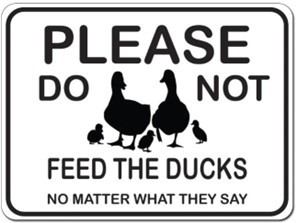
Please do not feed ducks. Most native ducks have highly specialised diets and rely on these diets to get the right nutrients. Ducks evolved to feed on these native diets thousands of years before humans first arrived in Tasmania. The best way to help them with food is to simply let them find it themselves.
Feeding ducks only serves to support introduced ducks that aren’t as specialised at finding food in the Australian environment and are more tolerant of humans, like mallards and Muscovy ducks. Supporting these ducks makes it harder for smaller native ducks to exist in the same areas and speeds up the rate that mallards and Pacific Black Ducks are cross-breeding.
Putting out water containers for ducks has the same impact. Most ducks need to forage for food in large bodies of water, and small tubs of drinking water only helps mallards that don’t simply fly to find fresh water sources elsewhere.
Instead of feeding ducks, enjoy them by watching them, learning about them and trying to find all our different native ducks!
For more information, see the “Ducks of Tasmania” booklet.
Don’t forget:
- Don’t feed ducks any food or water.
- If you have free-ranging pet ducks, consider containing them, switching to Muscovy ducks or not getting more in the future.
- Enjoy ducks by finding and identifying them, learning about and simply watching them go about their business!
Dispersive Soils
Dispersive soils separate into particles when exposed to fresh water. They can be difficult to manage and are an important consideration in land use. Activities such as overgrazing, removal of top soil or excavation in dispersive soils areas can lead to dramatic erosion. The map below details areas of the Brighton Municipality where dispersive soils have been identified.
East Baskerville Land Capability Map
Information on the management of dispersive soils can be found at the DPIPWE website through the following link.
-

 Have Your Say
-
Previous Consultations
-
Youth Justice – Early Intervention Grants (Phase 2) – NOW OPEN
-
Community Grants Program 2026/27 – NOW CLOSED
-
Brighton Community Engagement Strategy – October 2025
-
We Stand Together Against Racism
-
Bridgewater Youth Hub
-
Brighton Youth Action Group (BYAG)
-
Safeguarding Children & Young People
-
Brighton Community News (BCN)
-
Volunteers & Brighton Community Volunteer Awards
-
Brighton Community Profile
-
Parks & Facilities
-
Art, Culture & Experiences
-
Environment & Climate
-
Community Services & Groups
-
Holding a Community Event
-
Brighton Alive
-
Local Business Directory
-
Public Health
-
Community Safety
-
Emergency Management
-
Bushfire
-
Brand Guidelines – Brighton Going Places
-
New Resident Kit
-
Visit Us
-
PDF quick links